
Articles
August 18, 2020
Turning to Kyriba for Payments Helped One Treasury Centralize Operations

# Banking
# Treasury Management System (TMS)
The benefits of using one TMS for treasury payments and retiring a homebuilt infrastructure.
One member of NeuGroup’s Global Cash and Banking Group recently shared the benefits of using Kyriba as a payment factory that handles about 85% of his company’s treasury payments. The advantages boil down to saving time while improving controls, oversight, visibility and efficiency, he said.
Ultimate goal. The treasury director said his company used Kyriba as a tool to achieve the primary goal of centralizing treasury operations across nearly a dozen large subsidiary companies, each with its own treasury department.
- The company’s first major task when implementing Kyriba was to connect its largest cash management banks across the globe to Kyriba for both payments and reporting. This allowed central oversight for corporate treasury to manage the day-to-day operations across each subsidiary, globally.
No easy feat. The treasury director called the process of implementing Kyriba “a big undertaking” that usually takes 18 months but that the company did in nine months with the help of Deloitte.
- Prior to the implementation, treasury used a different TMS vendor. The member said that most of its subsidiaries did not use TMSs, and just one used Kyriba.
- He said Kyriba’s payments module and version of a payment factory solution is the “biggest advantage” offered by the TMS, adding that the company has put “a lot of eggs in that basket.”
- A Kyriba fact sheet says its payments network features a pre-built format library with 800 bank format variations and 40,000 bank testing scenarios globally for 1,000 global banks, with the ability to reach up to 11,000 institutions via SWIFT.
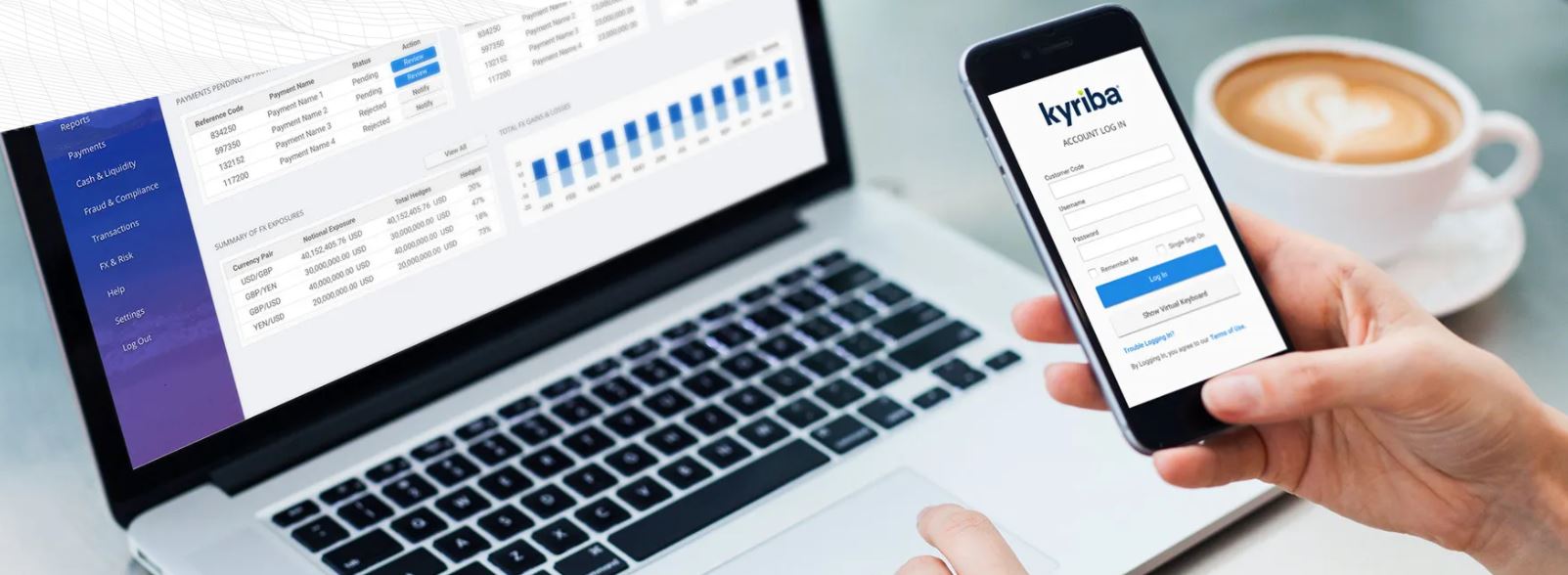
Lessons learned. This member stressed the importance of getting buy-in early on across each subsidiary or division, including appropriate internal capabilities outside of treasury such as accounting and IT.
- “These groups play a major part in the design and successful use of the TMS, so you want to give them a seat at the table early on during the planning and design phase,” he said.
Beyond treasury. The member’s company is now kicking off a six-month project to run nearly all the corporation’s AP payments through Kyriba. This will involve connecting four ERPs to Kyriba, he said. That means retiring “the homebuilt payment infrastructure” the company uses and has to maintain internally.
- The old system meant sending files to an internally built and managed EDI infrastructure and then to various banks via host-to-host connectivity, each with its own protocol for payment formats —with prohibitive costs for adding banks.
- Soon, an ERP connected to Kyriba will generate payment data coming from a supplier or customer invoice and send it to Kyriba. The TMS then puts the data file into the appropriate bank format and sends it to the bank through SWIFT. Payment files will pass through the TMS seamlessly to the bank without the need for human touch.
- “Kyriba does all the work,” the member said. “We’re happy with it.”
Dive in
Related
Insights
Talking Shop: Looking for Solutions To Optimize Global Tax Payments
Feb 16th, 2021 • Views 32
Insights
Talking Shop: Looking for Solutions To Optimize Global Tax Payments
Feb 16th, 2021 • Views 32