
Articles
September 30, 2026
How Nokia’s ‘Digital Workers’ Are Building Treasury’s AI Future

# Technology
# AI
# Fx
Strong leadership support, homegrown systems and a process-first approach are helping Nokia move from AI pilots to time-saving agents.
Nokia's treasury team is training AI agents to navigate processes, perform tasks and check their work—and they’re making solid progress: So-called digital workers now handle roughly 30% of an FX analytics workflow used for constant currency reporting at quarter end. The humans behind the AI push, Fredrik Wikner , Nokia's VP of Corporate Finance & Group Treasurer, and Christoffer Tietze , Head of Treasury Technology, start with a review of treasury’s underlying work: mapping each process, simplifying it where possible and determining where a digital worker can take over manual steps.
- Their broader goal is having AI agents execute processes end to end, while keeping humans involved in review and control. The two men described their approach during interviews and follow-up emails with NeuGroup.
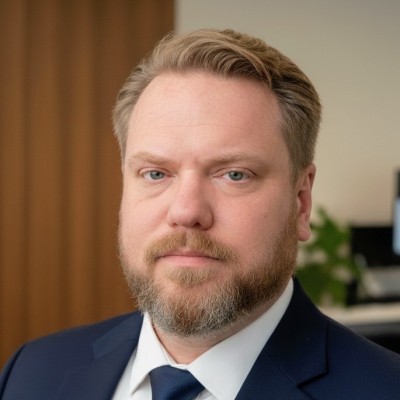
Christoffer Tietze, Nokia
Four hours of work before the day begins. Nokia’s first significant agentic AI application focused on FX analytics and constant currency reporting. Historically, the risk management team started the work at about 7:30 a.m. and finished around midday. Mr. Tietze says having a digital worker do roughly one-third of the work is rapidly reducing the time the team spends on the process.
- “The benefit of it now is that it should be ready when they get into the office,” Mr. Tietze said. “It cascades then down to the other processes and teams that need to work with this data.”
- Business groups that analyze results in actual and constant currencies can start work roughly half a day earlier, demonstrating the gains Nokia sees in automating processes from start to finish.
- “If you can reduce certain processes down by half a day, essentially, we get much closer to that goal,” Mr. Tietze said.
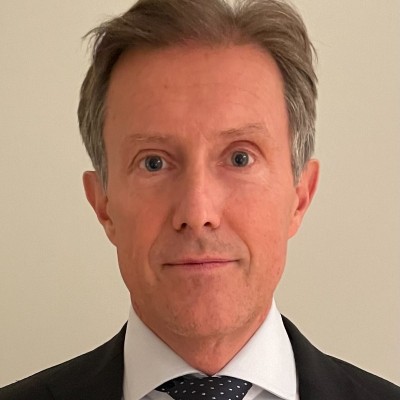
Fredrik Wikner, Nokia
Perfecting the process. Long before GenAI arrived, Nokia treasury built its tech prowess through roughly 25 years of digitization and automation. The finance team began building a homegrown technology environment in 1998, which evolved into Nokia Business Live, a framework supporting more than 100 applications and processes. That foundation gives treasury much of the infrastructure needed to connect AI with its data and workflows.
- As the team moves toward more complex AI applications, it reviews underlying processes first: examining where work can be simplified, where data sits, how decisions are recorded and what guardrails are needed before deciding where agents can add value.
- “That process reengineering helps us decide which AI use cases are worth doing, and what the impact is likely to be,” Mr. Tietze wrote in an email.
- In forecasting, for example, the team gave the same data to multiple large language models—including ChatGPT and Google Gemini—and asked them to reach a consensus. The approach significantly improved forecast accuracy compared with Nokia’s existing machine-learning model, prompting the team to explore how traditional machine learning and newer foundation models might work together.
- As the workflows become more complex, Mr. Wikner said collaboration between treasury experts and “the workers who have the competence to develop these solutions” will depend on finance’s ability to translate the problem into something the technical team can solve.
More agents, more guardrails. With the FX use case progressing, Nokia sees other internal processes as candidates for digital workers, including intercompany netting. Longer term, the team is considering whether agents might interact with external platforms such as FXall or Bloomberg, making human verification and ongoing monitoring increasingly important.
- “The horror scenario is you reduce your team to bare bones and all of a sudden this thing stops working. And what do you do?” Mr. Tietze said. To prevent this, he plans to retain enough process and technical expertise to step in when automation fails. “Any action the agent takes, it will get a verification step,” Mr. Tietze said. “We need to have a process in place that monitors it.”
- Nokia has leadership support to keep experimenting as it works through those risks. “We haven’t had to sell our CFO on this,” Mr. Tietze said. “He has come and told us to do it.”
Members of NeuGroup for EMEA Regional Treasury can hear directly from Mr. Wikner at the group’s Nov. 11 meeting in Geneva, where he’ll discuss Nokia’s approach to AI and its digital strategy.
- In addition, all NeuGroup members looking to explore more real-world applications of AI can turn to the NeuGroup AI Workbench , which collects use cases from across the network, and NeuGroup for Technology Transformation (NGTT) , where members compare notes on what’s working.
Dive in