
Articles
August 12, 2026
Forecast Reliability Calls the Tune on FX Hedging Changes

# Foreign Exchange
A NeuGroup survey finds forecast accuracy is the primary driver in changes to hedging programs—and where forecasts are shakier, members hedge less than policies allow.
A solid majority of FX risk managers weighing whether to make changes to hedging programs—like extending tenor and raising coverage ratios—base their decisions on how much they trust forecasts of their foreign currency exposures. That’s among the key takeaways from a new survey, Inside the FX Program: Strategy, Governance and Execution , conducted by NeuGroup Peer Research and sponsored by U.S. Bank .
- As the chart below shows, forecast reliability is the most-cited driver (58%) for members adjusting FX hedging programs, topping risk tolerance and market volatility. Forecasts are most important to risk managers engaged in cash flow hedging, where decisions on coverage levels depend on the certainty of anticipated exposures.
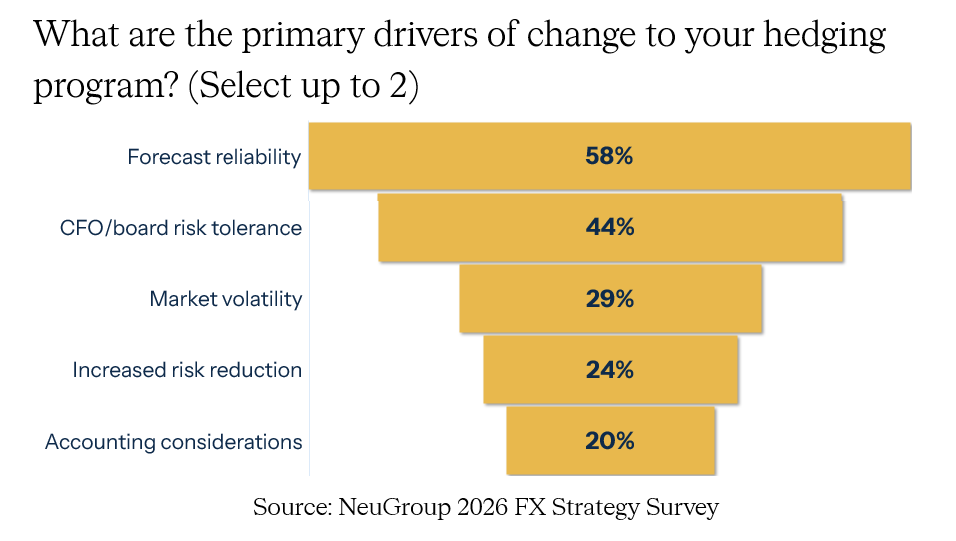
Treasury responsibility. Presenting the results to members of NeuGroup for Foreign Exchange , head of research Joseph Bertran said the driver rankings make sense because teams can't responsibly increase the tenor of hedges or lift coverage unless they have reason to believe the forecasts are accurate.
- Underscoring the importance of cash-flow forecasts to FX hedging, one member of the group discussing the results said their CFO is concerned about forecast reliability, and “treasury is responsible for those results—they’re measurable,” with a direct bottom-line impact.
- In another recent session, one member described a deliberate split in strategies: He hedges the two currencies he forecasts most confidently far more aggressively than the rest, which he keeps on a tighter leash.
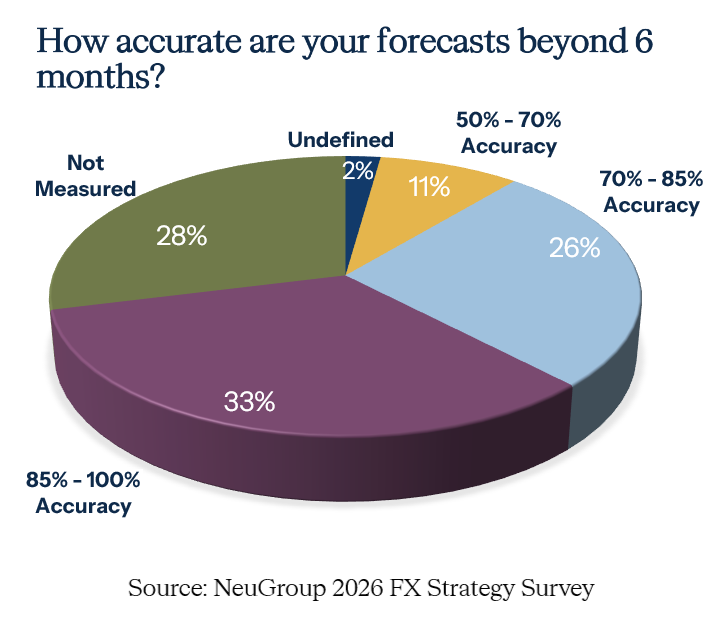
How far out treasury can see. A hedging policy caps how much exposure treasury may hedge, and teams choose where under that cap to sit. The survey shows that choice tracks forecast confidence—which usually declines as the time in the future that the forecast covers lengthens.
- Beyond six months, only 59% of members put their forecast accuracy at 70% or better, and 28% don't measure it that far out (see chart above). That explains a pattern revealed in the survey: policies routinely permit higher cash flow hedging ratios than what treasury teams actually hedge: While 61% of policies allow hedging ratios between 75% and 100%, just 39% actually target that range.
- By contrast, in hedging exposures on the balance sheet that sit on the books and where forecasts are less relevant, the share of survey respondents allowing coverage of 75% to 100% and the share targeting it are nearly identical at about 75%.
Dive in