

NeuGroup Research · 2026 Honorees
Working Capital Innovation Awards 2026
Celebrating the treasury and finance teams redefining how working capital is managed
In partnership with 
Introduction
Why these awards exist

Introduction from Joseph Neu, Founder & CEO
Working capital comes up in nearly every NeuGroup discussion, and our members consistently tell us they value what their peers are actually doing over what is possible in theory. We launched the Working Capital Innovation Awards to bring that conviction to one of the most consequential areas of corporate finance. Our aim is to surface practitioner work, have it reviewed by a jury of peers and experts and then share it in a form others can act on.
This year’s honorees are Bristol Myers Squibb, IBM, Colgate-Palmolive and Alibaba/Freshippo. Different as they are, each shows what becomes possible when treasury, procurement and the broader finance organization work toward a common goal, and each offers something you can take back to your own team.
My sincere thanks to everyone who submitted. Preparing a nomination takes real effort and a willingness to open one’s practices to peer scrutiny, and this program would not exist without you. Thanks also to our five jurors, whose working capital experience and judgment gave these awards their credibility; to SAP Taulia for its support as inaugural sponsor; and to the NeuGroup Research and Marketing teams for leading the project.
We hope these profiles start conversations and help turn validated insight into enabled outcomes. We would welcome continuing those conversations with you across our peer groups, including the NeuGroup for Working Capital Optimization, and we invite you to put your organization’s work forward next year.
Joseph NeuFounder & CEO, NeuGroupValidated Insight. Enabled Outcomes.

Foreword from Cedric Bru, Chief Executive Officer, SAP Taulia
Working capital has always mattered. But the way finance and treasury leaders are approaching it today is genuinely different.
When we set out to partner with NeuGroup on the inaugural Working Capital Innovation Awards, we were not looking to celebrate the obvious. We were looking for the work happening beneath the surface: the cross-functional collaborations that broke down long-standing silos, the technology decisions that created real transparency and the supply chain strategies that held up when conditions shifted.
What we found exceeded our expectations.
The organizations recognized in this report are not simply optimizing for yield or tightening payment terms. They are rethinking what good working capital management looks like across the entire enterprise and doing so in an environment that has tested even the most mature finance functions. Market uncertainty, rising cost of capital and accelerating technology adoption have all converged in a way that has pushed treasury and procurement closer together. That convergence is at the heart of every story in this report.
We are proud to have partnered with NeuGroup, whose depth of connection within the treasury and finance community is unmatched, to bring these stories to life. And we hope the insights in the pages ahead are useful not only as recognition of exceptional work, but as a practical reference for finance leaders looking to raise the bar within their own organizations.
Working capital innovation does not start with a vendor. It starts with people who see a problem and decide to solve it differently. This report is for them.
Cedric BruChief Executive Officer, SAP Taulia
The 2026 honorees
The Winning Programs
Four programs were recognized in 2026, one in each award category. Select a program to read its full profile.


Office of Working Capital Management
The Cash Leadership Office: turning cash discipline into an operating model.
Bristol Myers Squibb is one of the world’s largest pharmaceutical companies, operating in an industry defined by long development cycles, costly R&D and looming patent expirations. In this context, generating and protecting cash is not a periodic exercise but a strategic imperative: It funds the pipeline, sustains innovation and ensures the resources to bring new medicines to patients. That is the backdrop against which the company built its Cash Leadership Office.
When Bristol Myers Squibb set out to make cash a company-wide priority, it did not launch a project. It built an institution. Formally established in January 2023, the Cash Leadership Office (CLO) turned working capital from a periodic treasury exercise into an enterprise operating model, with board-level visibility and a cross-functional mandate spanning procurement, supply chain, commercial finance and collections.
A structure built to last
The CLO is anchored by a steering committee that meets monthly, and twice a year with the CFO as executive sponsor, alongside co-sponsors from FP&A and treasury and a dedicated Global Working Capital Lead. Named leads own each lever: procure-to-pay, order-to-cash, commercial and inventory. The design reflects a hard-won principle the team stresses: treasury cannot drive this alone. Accountability and incentives have to sit with the functions where the work actually happens.
Results that compound
The program has realized more than $600M in cash flow benefits from launch through mid-2026, with a further $200M-plus already identified in 2026 and a trajectory toward $800M. The levers range from payment-term standardization and trigger-date discipline to an expanding set of supplier-friendly options, including supply chain financing with J.P. Morgan, virtual card with Citi and dynamic discounting. On DPO, the gains came from two sources: tightening payment processes so the company paid on time and according to terms rather than ahead of time, and procurement-led actions including term standardization, supply chain finance and virtual card.
Technology as the multiplier
BMS pairs governance with technology to embed working capital discipline across the enterprise. It deployed Pactum, an autonomous AI negotiation agent, to scale supplier negotiations, and developed the internal Cash Conversion Cycle Optimizer, or CCCO Agent, to transform days of manual analysis into near-real-time, natural-language insights across DSO, DPO and DIO. By helping teams quickly identify performance drivers, investigate variances and prioritize actions with the greatest cash impact, the CCCO Agent is enabling faster, data-led decisions and a more sustainable cash culture.
What sets it apart
Among a crowded field of strong working-capital programs, BMS did the hardest thing: it made cash discipline permanent. The Cash Leadership Office turned working capital from a periodic treasury task into a governed, enterprise-wide capability, sponsored at the top and owned across the functions that drive it. The lasting achievement is not any single year’s number but an operating model built to keep delivering long after the initial wins are banked.
Where to start
Treasury cannot do this alone. BMS gave each lever a named owner outside treasury and held them to shared metrics, turning cash from a treasury request into a standing responsibility of the business.
Program at a glance
- Sector
- Healthcare/pharmaceuticals
- Scope
- Enterprise-wide, global
- Sponsor
- CFO, with FP&A and Treasurer co-sponsors
By the numbers
“Treasury can’t drive this alone. We don’t own payables, we don’t own procurement, we don’t own any of these functions.”
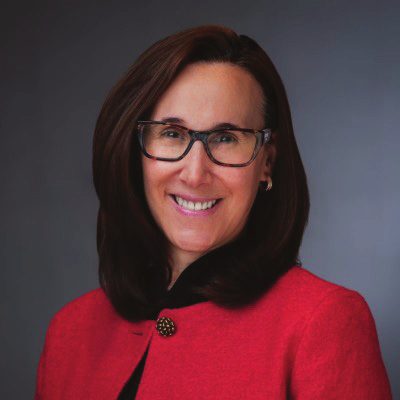 — Sandra Ramos-Alves, SVP Treasurer, Bristol Myers Squibb

Technology Transformation
FiTTER: rebuilding treasury as an integrated, AI-enabled engine for free cash flow.
IBM made free cash flow one of its two defining financial metrics and then set out to rebuild the treasury function to deliver it. Its working-capital story is, at its core, a technology story.
Under the banner of FiTTER (Financing, Treasury, Transformation, Enterprise Risk and Retirement Funds), the technology company rebuilt a fragmented, legacy treasury into an integrated, AI-enabled platform in under three years, and used it to drive one of the largest free-cash-flow improvements in the field.
From spreadsheets to a digital twin
IBM’s before state was all too familiar: spreadsheets, ad-hoc SQL queries, legacy ledger tools and a bespoke, multi-tenant TMS. FiTTER replaced it with a layered architecture, transactional processing, integrated operations, a scenario modeler and an analytics planning cube, feeding a Trusted Enterprise Integrated Data Model that unifies cash, procurement, sales, supply chain, finance and risk data. An agentic interface lets operators query the entire data set in natural language. The payoff was not just a cleaner tech stack. The integrated data model with an agentic interface gave treasury visibility and speed across DSO, DPO and DIO that the old manual systems could not, turning working capital from something reported after the fact into something managed in near-real time.
A culture rewired around cash
The transformation began at the top. In 2021 the Chairman aligned executive compensation to two primary metrics, revenue and free cash flow, and the discipline cascaded to the individual level, with FCF scorecards reaching sellers and operators. A dedicated Transformation Team stood up in 2023. As the team puts it, the technology, the working capital and the culture all changed at once.
The numbers
Free cash flow rose from $6.7B in 2021 to $14.7B in 2025, a 119% increase. At the same time the application footprint fell 64% (from 101 applications to 36), unit spend dropped 48% over this same period and the resource footprint fell 66%. Fewer systems, lower cost and dramatically more cash, generated by the same platform, all self-funded using a flywheel model (where the savings become the investment to accelerate the transformation).
What sets it apart
IBM is the standout in Technology Transformation because the technology is not a bolt-on; it is the engine. An integrated data model, embedded AI and agentic workflows turned treasury from a reporting function into a cash-generating capability, and did so while shrinking cost and complexity. IBM’s distinction is originality at the system level: not one tool, but a treasury rebuilt as an AI-native platform with free cash flow wired into incentives down to the individual, a reinvention few have attempted and fewer have turned into cash at this scale.
Where to start
Integrate the data before you automate it. IBM’s gains came from unifying cash, AR, inventory and terms into one trusted data model first, so that AI and agentic tools had something reliable to act on. The platform was the enabler; the integrated data underneath it was the prerequisite, and the natural language interface was how to get user adoption.
Program at a glance
- Sector
- Information technology
- Program
- FiTTER + IBM agentic interface
- Owner
- Brien Wierzchowski, Treasurer
- Timeline
- Exec comp aligned 2021; team established 2023; built in <3 years
By the numbers
“We cover all areas of transformation. We obviously focus on the capital markets space, working capital with the operators, but all of the technology underpinnings were changing at the same time as the culture, which is probably the hardest of those three.”
— Kevin Wilkins, Executive, Digital Transformation & Technology, IBM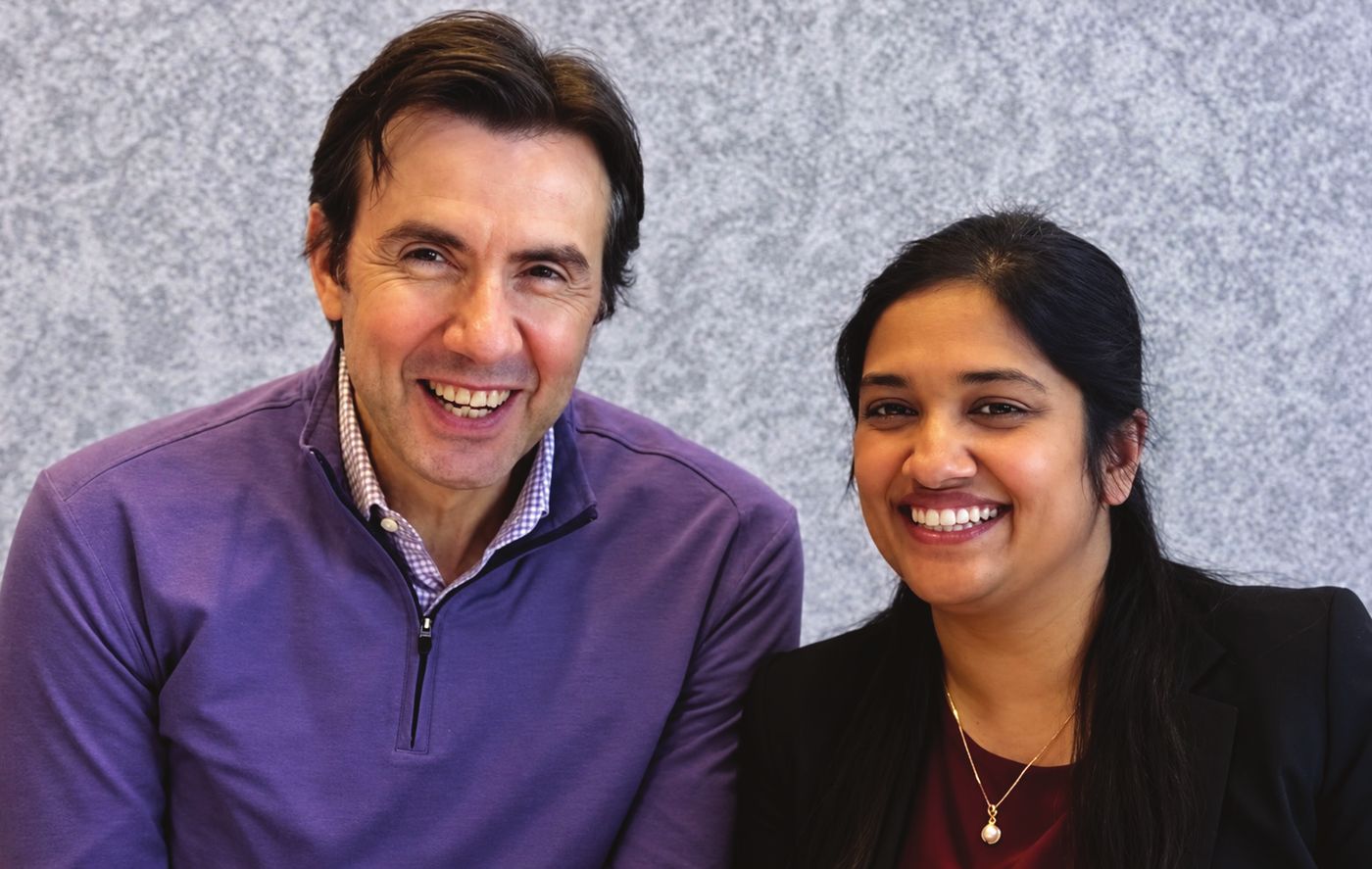

Procurement and Treasury Partnership
One number, two functions: a procurement and treasury partnership built to last.
Colgate-Palmolive’s working capital is spread across thousands of suppliers worldwide. Capturing it is less a technical problem than an organizational one: payment terms, cash and supplier relationships sit across procurement and treasury, two functions whose priorities naturally pull in different directions.
Colgate-Palmolive’s working-capital win is not a story about a clever financing structure. It’s about two functions that learned to operate as one. When a cash-generation goal landed as a top-three finance priority, Colgate made procurement and treasury joint owners of it, and turned a potential point of tension on supplier relationships into a program its procurement team now champions.
Built as a partnership from day one
Colgate’s policy has always been 90-day payment terms; however, it was not enforced consistently throughout the organization. To advance this critical priority, the CFO and Chief Procurement Officer co-sponsored the 90-day payment term standardization initiative from the outset, with shared KPIs (suppliers targeted, converted and cash generated) and a formal exception-approval process hard-coded into the ERP, so no contract could fall below policy terms without a tiered sign-off. Once procurement embraced the goal, they became its champions, taking pride in the results at their own annual reviews.
Standardization without a squeeze
Colgate had been paying faster than its peers, an outlier at 67 days against competitors well past 100. Standardizing to a 90-day policy corrected that position, and it was done with a firm rule from the CFO and CPO: no concession on other terms. Suppliers were offered an optional supply chain finance program, with two banks competing at each location to keep pricing low. Because roughly 95% of suppliers carried weaker credit than Colgate, those who opted in could access cash earlier and cheaper than they could borrow on their own.
Scale and discipline
The 90-day payment-term standardization initiative reached its three-year, $500M cash-generation goal a full year early. In parallel, Colgate rolled out an optional supply chain finance program, now available in 17 countries representing roughly 90% of spend, phased from the Americas through Asia and Europe. It is a choice, not a requirement: suppliers can use it to access cash early if they want or need to, but the goal was always to standardize terms at 90 days, not to drive SCF adoption. The initiative reached its targets without moving every supplier to the same endpoint on the same timeline.
As Anton Kolev put it, “Our goal always has been progress over perfection. If you can’t move suppliers to 90 days, you don’t stay where you are, you still move them.” That result came from standardizing terms off a faster-than-peer base, which is why the lasting achievement is the governance: joint sponsorship, shared metrics and encoded exception control that keep the program durable rather than a one-time push.
What sets it apart
Colgate is the standout partnership story in the field. Its program is a true embodiment of how procurement and treasury can operate as one, with one of the most complete governance models submitted for review: co-sponsorship at the top, shared accountability in the middle and control built into the systems where the work gets done.
The takeaway for peers
Align procurement and treasury from day one, while treating commercial terms and financing options as distinct tools. Colgate standardizes payment terms to policy; separately, an optional supply chain finance program gives suppliers the flexibility to access funds earlier.
Program at a glance
- Sector
- Consumer/household products
- Supplier terms
- Standardized to 90 days; optional two-bank SCF, no concession
- Reach
- Phased across the Americas, Asia and Europe
- Program leads
- Anton Kolev (Senior Director, Global Treasury); Ankita Dwivedi (Director, Procurement/Supply Chain)
By the numbers
“Once procurement embraced this, they became the champions of it. The reason why it worked was that it was not just a treasury initiative, but a joint one.”
 — Anton Kolev, Senior Director, Global Treasury, Colgate-Palmolive


Supply Chain Resilience and the Long Tail
Funding the long tail: paying small suppliers early, so the supply base stays alive.
Most supplier-finance programs are built to improve the buyer’s own cash position. Freshippo took a different approach. Alibaba’s data-driven grocery retailer holds a distinctive position in fresh produce, with a strategy of tracing products back to origin that has drawn a large base of small suppliers and vendors that have grown alongside it.
For those vendors, it runs two programs that pay its smallest, most cash-vulnerable suppliers early, primarily on its own balance sheet, at a speed-and-price combination few banks can replicate, for one reason: if those suppliers fail, the supply chain fails with them.
A mechanism few banks can reach
Two programs run side by side. A self-funded early-payment program, backed by Freshippo’s own cash rather than a bank, and a reverse-factoring program underwritten on Freshippo’s ecosystem performance data. Vendors can draw funds from as early as the moment goods arrive at the warehouse, before an invoice even exists, at tenors as short as one to two days. Traditional bank supply chain finance reaches neither that far down the supplier base nor that fast.
Priced for the smallest, not against them
Crucially, pricing is not based on supplier size or financial strength. Freshippo prices on the depth and history of the relationship, and the smallest vendors face no size-based penalty. Low entry barriers, ease of use and competitive pricing are what make it work for the smallest vendors. For a small fresh-goods vendor, that is the difference between affordable liquidity and none at all.
Reaching the genuine long tail
Suppliers are tiered by cumulative share of procurement value over a trailing year. Among those drawing funds, small suppliers make up about 26% under early payment and about 7% under reverse factoring, with an average drawdown near RMB 400K (about US$56,000) and a minimum transaction below RMB 50K (under about US$7,000), confirming the program serves truly small vendors. And it does so by design: Freshippo funds early payment from its own cash and provides its supplier data to underwrite the factoring program, rather than leaving small vendors to secure bank financing on their own.
What sets it apart
Freshippo inverts the decades-old pattern of large corporates pushing terms onto the suppliers who can least afford it. A cash-rich buyer choosing to fund its most vulnerable vendors early, with rapid access, data-driven design and rates the market can rarely offer, to keep its supply base healthy, is a genuinely novel approach to supply chain resilience, and the clearest long-tail story in the field.
The takeaway for peers
Supplier resilience can be a working-capital strategy, not just a cost. Funding the long tail deliberately with fast access, user-friendly operations and reasonable pricing can be a defensive investment in the supply base itself.
Program at a glance
- Sector
- Retail/new-retail grocery
- Region
- China (Asia-Pacific)
- Mechanism
- Self-funded early payment + reverse factoring
- Pricing
- Based on relationship, not size
By the numbers
“We built the program—in close partnership between Freshippo treasury and Alibaba Group treasury—so that any supplier, regardless of size, can access liquidity at a fair price with speed. As a member of the Alibaba Group, we see this as living Alibaba’s mission of ‘making it easy to do business anywhere’: supporting these suppliers is both a supply-chain imperative and a social responsibility we embrace as a core enterprise.”
 — Fiona Li, PM, Freshippo
USD figures are approximate, converted at about RMB 7.1 to US$1.
Side by side
Four programs, one pattern
Different sectors, different mechanics. Compare the winners on the dimensions peers ask about most.
| Bristol Myers SquibbOffice of Working Capital Management | IBMTechnology Transformation | Colgate-PalmoliveProcurement and Treasury Partnership | Alibaba/FreshippoSupply Chain Resilience and the Long Tail | |
|---|---|---|---|---|
| Sector | Healthcare/pharmaceuticals | Information technology | Consumer/household products | Retail/new-retail grocery |
| Reach | Enterprise-wide, global | Treasury rebuilt on FiTTER, with an agentic interface | Phased across the Americas, Asia and Europe | China (Asia-Pacific) |
| Signature move | A governed Cash Leadership Office with named owners for each lever | An integrated data model and agentic interface, with free cash flow wired into incentives | 90-day terms standardized under CFO and CPO co-sponsorship; optional two-bank SCF | Self-funded early payment plus reverse factoring for the smallest vendors |
| Headline result | $600M+cash flow benefits, launch to mid-2026; tracking toward ~$800M | +119%free cash flow, $6.7B (2021) to $14.7B (2025) | $500Mthree-year goal reached a full year early | ~US$972Mper year channeled to long-tail vendors (~RMB 6.9B) |
| Where to start | Give each lever a named owner outside treasury and hold them to shared metrics. | Integrate the data before you automate it. | Align procurement and treasury from day one; treat commercial terms and financing options as distinct tools. | Treat supplier resilience as a working-capital strategy, not just a cost. |
| Full profile |
Alphabet/Google
Recognized independently of the four award categories
Google produced two of the most original ideas in the field. Project Glisten uses large language models to read supplier contracts, find where the service-location currency and the contract currency diverge and propose modifications to maximize natural hedges in business exposures and achieve contract savings.
in contract cost avoidance to date, identified by Project Glisten
What the program does
The program has analyzed tens of billions of dollars in exposure across a large volume of contracts. The team uses these tools to identify FX premium savings, resulting in $32M in contract cost avoidance to date. A separate Google program uses agentic AI to invest excess cash, with people overseeing its decisions. Neither program targets operating working capital in the strict sense, but both reflect new thinking, allow Google to redirect capital to new investments and empower employees to think strategically in the age of AI.
The partnership behind Glisten
Sherbing Wu, Senior Risk and Investments Analyst, spearheaded the company-wide policy behind Glisten with executive sponsorship from Assistant Treasurer Sidd Mundra and Global Procurement Director Hari Krish. The policy routes roughly 80% of procurement spend through FX review. Automated workflows flag contracts that carry material currency risk for follow-up via negotiations.
Navigating complex trade-offs
Project Glisten has driven various FX solutions given complex currency regulations, internal operational requirements and opposing supplier requirements. In one $200M+ negotiation, treasury proposed to denominate the contract in a local currency. However, the supplier preferred USD based on its own FX strategy. As a compromise, the teams settled on a contractual FX collar to limit the supplier’s own FX risk while achieving Google’s commercial objectives. The solution resulted in $3M in spend avoidance on that contract alone.
Take the full report with you
All four profiles, the special recognition, the jury and the methodology, laid out for your next team discussion.
About the awards
Our approach and methodology
The NeuGroup Working Capital Innovation Awards recognize treasury, procurement and finance teams whose work has measurably advanced how their organizations manage working capital. They exist to surface and validate what leading practitioners are actually doing, so that peers across the NeuGroup Network and the wider finance community can learn from, and build on, proven approaches.
Award pillars
The Office of Working Capital Management
Programs that elevate working capital into a governed, enterprise-wide discipline, with structure, decision rights and senior sponsorship built to last.
Technology Transformation
Programs where technology, automation, AI or data integration fundamentally changed how working capital is managed and the results it delivers.
Procurement and Treasury Partnership
Programs where procurement and treasury operate as one, with shared governance, metrics and accountability for working capital outcomes.
Supply Chain Resilience and the Long Tail
Programs that extend working capital support deep into the supplier base, including the smaller, harder-to-reach vendors most exposed to disruption.
How programs were scored
The rubric weighted four dimensions, applied blind by each juror.
How nominations were sourced
An open call invited any organization to put its work forward, with progress valued alongside fully realized results. Nominations came from across the NeuGroup Network, the program’s sponsor and third-parties. Candidates were surfaced through member interviews and peer-group sessions, direct self-nominations, and nominations from members and partners.
How winners were selected
- Six-week nomination window. Submissions arrived via a web-based survey, with participants selecting the pillar that best fit their submission.
- Screened for completeness. Nominations were screened for completeness and the strongest advanced.
- Independent jury, scored blind. An independent jury of five senior treasury and finance leaders scored each program blind against a common rubric.
- Deeper dives. Deeper dives into shortlisted programs included interviews of the nominees.
- Final deliberation. Judges confirmed the winners at a final jury deliberation.
In closing
What the 2026 programs tell us
The four winners (a pharmaceutical leader, a technology company, a consumer-products multinational and a grocery retailer) look nothing alike on paper, and their mechanics varied widely. The pattern underneath did not. In most of them, working capital stopped being a periodic treasury task and became an enterprise discipline: owned across functions, sponsored at the top and measured as a strategic outcome rather than a quarter-end number.
Cross-functional ownership, particularly between treasury and procurement, was the clearest dividing line. BMS built its Cash Leadership Office on the principle that treasury cannot drive working capital alone, and Colgate’s program worked, in Anton Kolev’s words, because “it was not just a treasury initiative, but a joint one.” Technology paid off where it gave teams visibility and speed; IBM integrated its data before automating on top of it. The strongest supplier program set out to strengthen the supply base rather than squeeze it, as Freshippo did by funding its smallest vendors early, primarily on its own balance sheet.
Most of these practices (governance structures, shared metrics, standardized terms and supplier financing, along with the data that supports them) are within reach of any organization willing to do the cross-functional work. That is why they are worth recognizing.
The jury also weighed strong programs beyond the four winners, a sign of how widely finance teams at leading companies are rethinking working capital. Many are still building results, and we would not be surprised to see some of them among next year’s honorees.
Meet the jury
Chosen by peers and experts
The 2026 honorees were selected by this independent panel of senior treasury and finance leaders, whose experience across working capital, treasury and corporate finance gave the awards their credibility.
 Anita MehraFormer Treasurer, Microsoft
Anita is a globally recognized finance and capital markets executive, board director and strategic advisor with nearly three decades of leadership across treasury, enterprise risk, AI-enabled finance transformation and capital strategy. She brings deep board-level expertise in fiduciary oversight, balance sheet governance and strategic capital deployment, with a strong record of helping boards and executive teams navigate growth, transformation and market disruption.
 Björk OhlhorstFormer Senior VP Procurement, Henkel Corp.
Björk has held functional C-level roles, P&L responsibility, and plant and SBU management across the chemicals, food and consumer packaged goods industries, where he drove organic and acquisitive growth, increased profitability and grew market share. As an executive advisor, he helps companies identify M&A opportunities, manage integrations and advance go-to-market strategy, supplier sustainability, cash improvement and cost reduction.
 Joachim WettermarkFormer Treasurer, Salesforce
Joachim is the founder of Wettermark Capital Advisors, LLC, and a global finance executive with more than 25 years of experience leading corporate finance, treasury, capital markets, procurement and financial planning & operations at scale.
 Rob VettorettiFormer Managing Director, PwC
Rob has more than 25 years of experience helping Fortune 500 companies in the Industrial, Consumer, Retail, Pharmaceutical, Technology and Energy sectors improve free cash flow, optimize working capital and transform treasury. Whether supporting a transformation, growth or M&A, he helps companies implement the strategies, processes, operating models and technology to sustain leading performance.
 Ron ChakravartiFormer Managing Director, Global Head – Client Advisory Group, Citi
Ron brings global treasury consulting, corporate banking and transaction banking experience spanning Asia, Europe and the Americas. He currently helps advance key NeuGroup strategic initiatives across research, member enablement, execution sprint programming and practitioner advisory, bringing greater depth and more measurable outcomes to the NeuGroup experience.

What’s next
The 2027 Awards
The Working Capital Innovation Awards return in 2027. If this year’s honorees show what is possible, next year is an invitation to put your own team’s work forward.
What to expect
- Recognition across the award pillars, with the same independent, peer-reviewed judging.
- The 2027 awards will feature a sustainability-linked category, new regions and an in-person celebration recognizing winners.
How to take part
- Nominations open May 2027. Self-nominations and peer nominations are both welcome.
- To express interest or nominate your organization’s work, contact Joseph Bertran, Senior Director, Research at [email protected].
In the meantime, we encourage you to connect with peers to learn more about how to improve working capital by joining our NeuGroup for Working Capital Optimization.
About
The Global Network Shaping the Future of Finance

NeuGroup
NeuGroup is the premier membership network for forward-looking leaders across the office of the CFO, including treasurers, heads of FP&A, chief audit executives and beyond, at the world’s most iconic companies and those shaping what comes next.
Through curated peer forums, benchmarking and execution-oriented follow-ups, we help members identify and implement solutions that create measurable value and transform how they work.
We move members from insight to outcomes so they never have to lead alone. We’ve been doing this for three decades. We know what works. And we’re built for what’s coming.
SAP Taulia
SAP Taulia, a global fintech leader, delivers AI-powered working capital solutions that unlock liquidity and drive supply chain resilience. With a global network of 50+ funders and over $1 trillion in annual transaction volumes, SAP Taulia offers the most comprehensive set of working capital management tools in the industry, seamlessly embedded into SAP. Trusted by global leaders like Airbus, Red Bull, T-Mobile and Bridgestone, SAP Taulia’s reliable and innovative solutions empower businesses to improve cash flow and unlock growth opportunities at scale.